


Friday Focus: Black history is American history
February 18, 2021
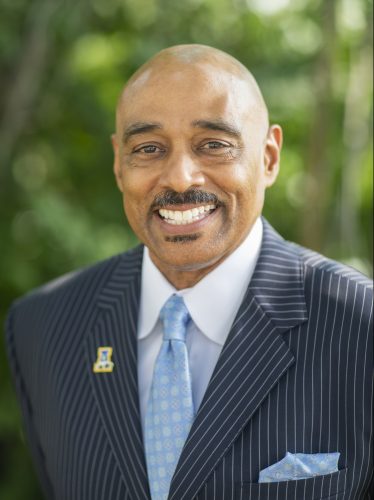
鈥� by Keith Champagne, vice chancellor for student affairs
Carter G. Woodson, a Harvard-trained African American historian, announced Negro History Week in February 1925 to coincide with the birthdays of Abraham Lincoln and Frederick Douglas, and to recognize the importance of Black history in the drama of the American story.
Woodson witnessed how Black people were underrepresented in the history books and stories that shaped the study of American history. In fact, based on how history was taught by many historians, African Americans were barely mentioned as a part of the nation鈥檚 story, a narrative that Woodson knew was not accurate and truthful. He often stated, 鈥淚f a race has no history, if it has no worthwhile tradition ... it stands in danger of being exterminated.鈥�
Moreover, President Gerald Ford officially recognized Black History Month in 1976, calling upon the nation to 鈥渟eize the opportunity to honor the too-often neglected accomplishments of Black Americans in every area of endeavor throughout our history.鈥� For example, let鈥檚 reflect on some notable inventions and patents by African Americans that are a currently a part of the 麻豆原创鈥� existence and daily operations: lawn mower, elevator, door holding device, air conditioning and thermostat, fire extinguisher, and the lawn sprinkler, just to mention a few.
Black History is American history. Henrietta Lacks was an African American woman whose cancer cells, in the 1950s, were the source of the 鈥淗eLa鈥� cell line and one of the most important cell lines in the history of medical research. Her cells were the first to be observed to divide multiple times without dying, which is why they became known as 鈥渋mmortal.鈥� Ms. Lacks鈥� cells were used to develop the following: the polio vaccine, and research for cancer, AIDS, gene mapping and many other scientific pursuits, including insights into COVID-19.
Furthermore, in January 1958, Willie O鈥橰ee broke the color barrier in the National Hockey League, just as his hero Jackie Robinson had done earlier in the National Baseball League. In 2018, O鈥橰ee was finally inducted into the Hockey Hall of Fame in recognition not only of his legacy, but for the way he has built on it in the decades since. He has been for 20 plus years now an NHL executive and has helped the NHL鈥檚 diversity program expose more than 40,000 boys and girls from diverse backgrounds to the unique hockey experiences and history. In 2005, Willie O鈥橰ee received the Order of New Brunswick, the highest honor of the Province of New Brunswick. In 2008, he was named to the Order of Canada, and the Fredericton, New Brunswick City Council named their new hockey area after him in honor of his many accomplishments. In addition, the NHL established the Willie O鈥橰ee Community Hero Award in his honor in 2018. The award recognizes those who, like Mr. O鈥橰ee, have used hockey to 鈥渂uild character, teach life skills and foster positive values.鈥� Willie O鈥橰ee to this day remains a major public figure with an extensive network across all of North America.
In 2016, President Barack Obama stated, 鈥淏lack History Month should not be treated as though it is somehow separate from our collective American history, or somehow just boiled down to a compilation of the greatest hits from the March on Washington, or from some of our sports heroes. It is about lived, shared experiences of all peoples of the African diaspora, high and low, famous and obscure, and how those experiences have shaped and challenged and ultimately strengthened America.鈥�
Friday Focus is a column written by a different member of 麻豆原创F鈥檚 leadership team every week. On occasion, a guest writer is invited to contribute a column.