


Sharing science and knowledge in Western Alaska
April 17, 2018
Sue Keller
907-474-6703
The 11th Western Alaska Interdisciplinary Science Conference, held in Nome last month,
drew more than 130 people from Alaska, the Bering Strait region and beyond.
The conference's theme this year was 鈥淪haring Science and Knowledge.鈥� It was hosted
at the Northwest Campus and organized by 麻豆原创F faculty members Claudia Ihl and Gay Sheffield.
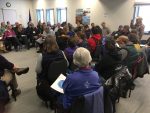
鈥淭he plenary talks were awesome,鈥� said Sheffield, Alaska Sea Grant Marine Advisory agent in Nome. 鈥淭hey really set the tone for the conference and all the good discussions that followed.鈥�

Carolina Behe of the Inuit Circumpolar Council, along with Raychelle Aluaq Daniel (Pew Charitable Trust) and Julie Raymond-Yakoubian (Kawerak Inc.), launched the conference with their keynote address, "Co-production of Knowledge in the Arctic." The topic of sharing different knowledge systems (Indigenous and Western-based) provided an educational experience for more urban-based participants, said Sheffield.
Rick Thoman, from the National Weather Service, spoke about the unprecedented lack of sea ice in the northern Bering Sea and Bering Strait region of Alaska. He confirmed that some areas, including Gambell, currently have no sea ice for the first time in 150 years of written record-keeping. Thoman, who has lived in Nome in the past, gave serious warnings to residents.
鈥淓very individual and every community should get prepared for the effects of sea ice loss and sea level rise such as erosion and potential for storm damage,鈥� Thoman said.
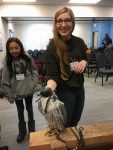
One of the favorite talks was by the Seward Peninsula鈥檚 master falconer John Earthman, who brought two live gyrfalcons (Falco rusticolus) to the meeting room. After his presentation the crowd wanted to stick around and talk with Earthman. 鈥淲e got a little off schedule then but everyone was very interested to see Arctic falcons up close and learn more about them,鈥� Sheffield said.
Davin Holen, Alaska Sea Grant coastal community resilience specialist, and Ed Plumb of the National Weather Service led a workshop on weather forecasts for Western Alaska communities. Retired Alaska Sea Grant seafood specialist Brian Himelbloom won the 鈥渂est local application of sharing science and knowledge鈥� award for his talk on .
Todd Radenbaugh, professor of environmental science at the Bristol Bay Campus and founder of the conference, presented 鈥淲here Science Unites with Traditional Knowledge.鈥�
鈥淲hat we do is share knowledge from all walks of life鈥攍ocal knowledge, and knowledge from an academic perspective and an industry perspective,鈥� he said. 鈥淲hen you live in a smallish community in Western Alaska, it鈥檚 important to share this knowledge so we can live more comfortably and more sustainability in our communities, and start solving some of the larger issues, especially climate change.鈥�
On the last day of the conference, Megan Alvanna-Stimpfle of Arctic Geopolitical Consulting spoke about place-based knowledge and decision making, including the tumultuous history of King Island peoples and the importance of culture and language in knowledge and decision making.
Conference sponsors were Northwest Campus, Alaska Sea Grant, the Norton Sound Health Corporation, the Norton Sound Economic Development Corp., Sitnasuak Native Corp. and the City of Nome.
The Western Alaska Interdisciplinary Science Conference is held every spring, rotating among Bethel, Dillingham, Kotzebue, Nome and Unalaska. The spring 2019 location has not yet been announced.