


Storytelling, diverse views inspire ScienceTapes project
April 5, 2018
Lindsey Heaney
907-474-1939
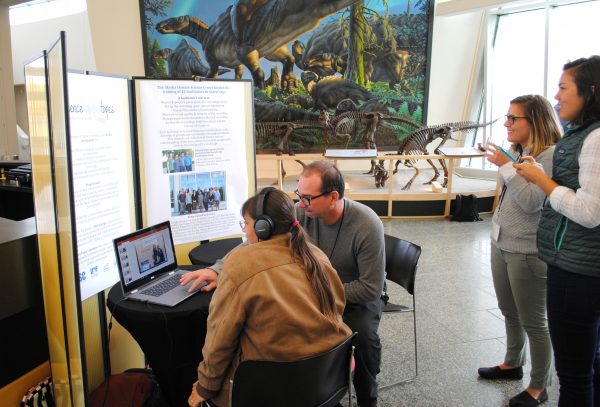
What stuck with Jessie Young-Robertson after attending a large international science conference didn鈥檛 have anything to do with the scientific data presented.
Young-Robertson, a researcher with the 麻豆原创 School of Natural Resources and Extension, was hoping to be inspired. She wanted to connect to the larger world of science through the experiences of researchers, but something was missing.
鈥淚 sat through talk after talk thinking I just want someone to tell me a story,鈥� said Young-Robertson. 鈥淭hat鈥檚 when I started looking into StoryCorps.鈥�
StoryCorps is a nonprofit organization that records and preserves stories from people of all backgrounds. Young-Robertson reached out to her Alaska Climate Adaptation Science Center colleague Bob Bolton, and their conversation started a year-long partnership with StoryCorps and the creation of a story-based program of their own.
鈥淪toryCorps gave us the tools and building blocks that we needed. I felt incredibly inspired by listening to our first volunteers record their stories and I knew we were onto something amazing,鈥� said Young-Robertson. 鈥淣ow we鈥檙e looking to move forward with ScienceTapes.鈥�
was created to provide a space to share Alaska鈥檚 science and place-based stories with a goal of building bridges between people, communities, agencies and scientists. Using the StoryCorps model, each story comes from a conversation between people with different perspectives.
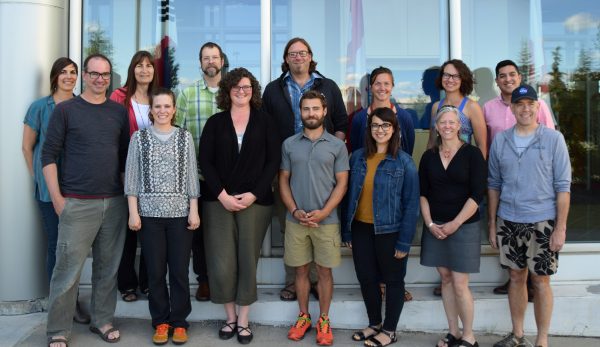
To collect the ScienceTapes stories, Young-Robertson and Bolton chose 12 facilitators from various agencies with different perspectives on science, ranging from a tribal liaison to science communicators and educators.
鈥淎s of now, our facilitators have recorded more than 45 stories, which are archived with the Library of Congress,鈥� said Young-Robertson. 鈥溌槎乖� 10 of them have been fully edited down.鈥�
One of the project鈥檚 immediate aims is to enhance connections between scientists and the people in communities where the research happens. Young-Robertson said it starts with sharing knowledge, but it doesn鈥檛 end there. 鈥淩esearchers need to understand the lens through which rural communities see us and then use that information to strengthen those relationships.鈥�
The stories also offer content that enhances Alaskans鈥� capacity to make well-informed decisions about science-based issues. Each conversation is unique with the storyteller offering insight through their personal experiences and knowledge.
One example came from a conversation between Young-Robertson and her then-student Abraham Endalamaw, who wanted to talk about his journey from Ethiopia to Alaska. As they remembered Endalamaw鈥檚 graduation day, Young-Robertson recalled that she had not recognized the significance of him wearing his national flag.
鈥淏efore I came here I was working as an activist organizing people to speak out,鈥� Endalamaw said. 鈥淚f I were in Ethiopia right now, I would be in jail or probably, I would be killed. When I had my country flag on, I am safe but I cannot be as happy as I want to be that day because I would really like to see my country free.鈥�
They also discussed his experiences during graduate school at 麻豆原创F. Young-Robertson described trying to get Endalamaw to speak louder for his thesis defense by having him read a newspaper to her from across a room.
鈥淚t鈥檚 partly cultural, we are not encouraged to speak louder (in Ethiopia), but I also want to be heard,鈥� said Endalamaw.
Another story emerged from a conversation between Megan Hillgartner and Sorina Seeley, who came to 麻豆原创F as fellows from the Middlebury Institute of International Studies to finish their degree in international environmental policy.
They recalled their struggle to connect with a liaison to a community important to their research.
鈥淲e wanted her to trust us right away based on what we thought were principles of trust,鈥� Seeley said. 鈥淏ut we didn't listen to her story.鈥�
After they regrouped and went back with a different approach, Seeley said that changed. 鈥淲e just listened. We didn't have any questions. We didn't have any ideas. That space for communication grew back.鈥�
With the ScienceTapes project, the team is looking to expand the reach of their stories by collaborating with rural and urban radio stations. The stories will soon be featured on K麻豆原创C鈥檚 , and there are plans to develop an app for mobile users to access stories right at their fingertips.
The stories will also be available for people to explore in person at the University of Alaska Museum of the North. Live recording opportunities and storytelling activities will be available at the museum鈥檚 family day event on April 21.
As the team moves forward with their work, they hope that these stories continue to provide a source of inspiration and empowerment.
鈥淚 see ScienceTapes as a beacon for people to come and listen,鈥� said Young-Robertson. 鈥淎nd as a beacon for people to be heard.鈥�
To participate in ScienceTapes, email sciencetapes@alaskavoices.org with "recording a story" in the subject line.
ADDITIONAL CONTACT: Theresa Bakker, 麻豆原创 Museum of the North, 907-474-6941, tabakker@alaska.edu