


麻豆原创F people in Hawaii marched through missile alert
February 2, 2018
Meghan Murphy
907-474-7541
What鈥檚 a scientist to do when a ballistic missile alert comes in?
鈥淲e'll go down in glory doing science,鈥� said 麻豆原创 physics professor Peter Delamere with a chuckle.
He was attending the last day of a physics conference in Hawaii that fellow 麻豆原创F physics professor Hui Zhang helped organize. Scientists from around the world were at the meeting to discuss space plasma related the sun and the solar system鈥檚 planets.
Delamere was chairing a session when the first speaker began. The speaker鈥檚 phone, which sat next to the microphone, sounded a beep through the mike.
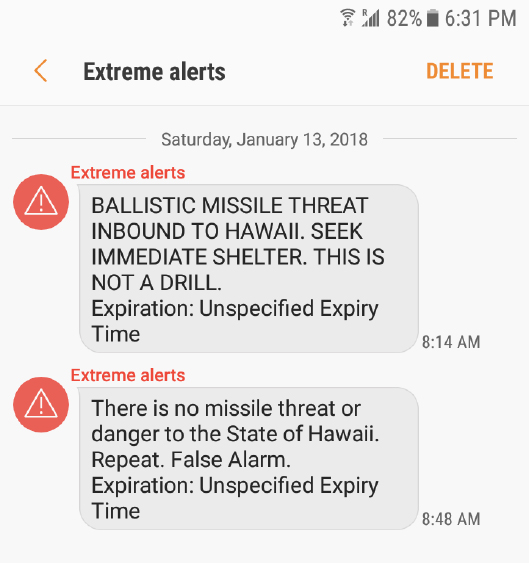
As the speaker apologized profusely, other phones began to buzz and beep. Everyone in the room looked at their phones and read the same message 鈥� "Ballistic missile threat inbound to Hawaii. Seek immediate shelter. This is not a drill."
Nobody knew it at the time, but a state employee in Hawaii had mistaken a missile drill for the real thing and sent an alert to everyone on the island.
鈥淭here was a period of silence,鈥� Delamere said, 鈥渁nd finally somebody from the back shouted, 鈥楯ust keep talking!鈥欌��
The speaker continued.
鈥淲e sent somebody to find out where shelter was,鈥� Delamere said. 鈥淭hey came back and informed that the hotel had no shelter and we were to just stay in place. So our conference carried on.鈥�
Delamere withheld questions so multiple speakers could talk, because if the end was coming everyone want to make a final scientific impact. When an 鈥渁ll clear鈥� message came through the phones, the room breathed a collective sigh of relief and the questions flowed.
鈥淚 don't know whether that was the right thing to do, but I've asked several people what would a group of scientists do under the circumstances,鈥� said Delamere. 鈥淎nd it's been unanimous. Everybody has guessed, correctly, that we just kept going."
Delamere and Zhang weren鈥檛 the only 麻豆原创F people in Hawaii during the alert on Jan. 13 a little after 8 a.m. local time. Other 麻豆原创F faculty, staff and students were there on vacation or as part of a 麻豆原创F course.
Many said the experience felt like being in the twilight zone.
鈥淚t was just absurd 鈥� being caught somewhere between 鈥楾his can鈥檛 be happening鈥� and 鈥業t must be happening,鈥�" said Anna Liljedahl, research director of the Water and Environmental Research Center.
She was in Hawaii on vacation with her husband Jeff Benowitz, a Geophysical Institute researcher.
The two were about to board a return flight to Fairbanks when the missile alert came in.
鈥淭he pilots went pale. A flight attendant was crying. I walked up to the ones at the desk and asked 鈥榃hat鈥檚 the protocol in an open air airport? And they said 鈥業 don鈥檛 know,鈥欌�� said Liljedahl. Benowitz discovered passengers hiding in the bathroom, which at least had the usual conveniences. Benowitz couldn鈥檛 stay, though, because his wife wanted to rent a car and out run the missile.
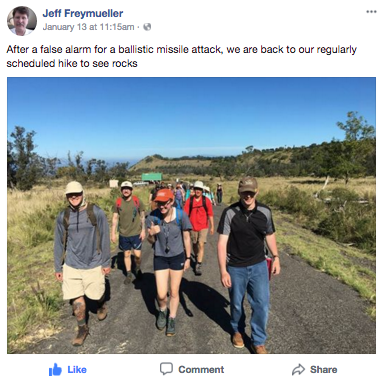
Elsewhere in Hawaii, 麻豆原创F geosciences professor Jeff Freymueller called his wife to explain the missile alert and say, 鈥淚 love you.鈥� He then searched the hotel for his 17 students and two teaching assistants.
He told those he found, 鈥淲e鈥檙e going to stay here for the moment until we figure out what鈥檚 going on, but let鈥檚 just pack for the day 鈥� and I guess stay away from the windows.鈥�
Some students heeded his advice, while others cried.
Students from all over the nation had flown to the Big Island to take Freymueller鈥檚 week-long class on volcanology. They were staying in a 100-year-old hotel with thin plywood walls on an exposed mountainside.
Frueymueller realized there was nowhere to run. But he also figured only five minutes remained before they would perish or at least be prepared to continue the day鈥檚 lessons.
He explained that it takes a ballistic missile 30 minutes to travel between the United States and Russia. He learned this during the Cold War when nuclear tensions were critical between the U.S. and then Soviet Union.
Freymueller assumed the missile hitting Hawaii might be coming from North Korea due to recent political tensions, but it would take less than 30 minutes 鈥� maybe 20? And it had probably taken 10 minutes for Hawaii officials to detect an incoming missile and then alert people via phone. So in about five minutes, they should be in the clear. A phone alert soon confirmed it.
He gathered the students to begin their hike.
鈥淭he rest of the day was totally normal,鈥� he said, 鈥渦ntil a student stepped on a sea urchin.鈥�
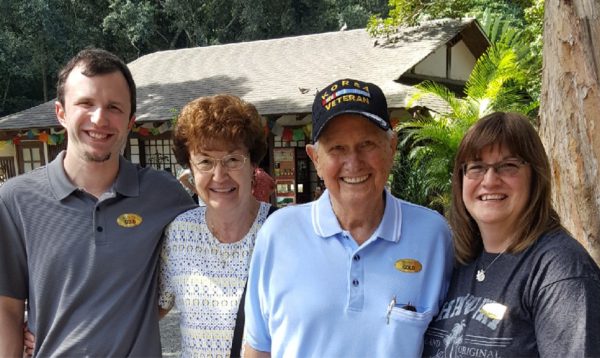
The rest of the day, however, didn鈥檛 seem so normal to 麻豆原创F fiscal technician Julene Gavin, who was in Hawaii on vacation with her parents and son.
People on her bus tour were still receiving incoming missile alerts on their phones hours after the missile alert crisis was allegedly over.
Gavin never received the alert herself. She learned of it from the 12 other people who received it as the group traveled down eight floors in an elevator.
When the elevator opened, the group went to the hotel鈥檚 front desk and asked what they should do next.
鈥淭he clerk replied, 鈥業鈥檓 sorry. You鈥檒l have to wait. I鈥檓 checking somebody in right now,'鈥� said Gavin.
They then asked the bellhop if he knew what to do. He said he didn鈥檛 and then just stared at the sky.
鈥淚t was just weird,鈥� Gavin said. 鈥淚t was just really weird.鈥�
She said some people outside the hotel were running while others were just lazing about. Since no one knew what to do, Gavin and her family waited for their scheduled tour bus, which was 20 minutes late.
They began casually discussing the missile alert with people at the same bus stop who were going to a golf tournament. Who knew the nuclear apocalypse would be so pedestrian?
Nancy Bigelow, director of 麻豆原创F鈥檚 Alaska Quaternary Center, also decided to march on with her vacation during the missile alert.
She was renting a room from people who lived in Hawaii and were still in the house.
鈥淚t was clear that no one in the house was doing anything. No one was going anywhere,鈥� she said. 鈥淪o I just continued eating breakfast and planning my day.鈥�